

News
Shorts Wholesale Supplier in US: Duties & Price Tiers
# Shorts Wholesale Supplier in US: Market Signals and Import Notes from Our Factory Floor
Let me start with the question every buyer sends us in the first email: How much will these shorts actually cost by the time they land in the US? The FOB price is the easy part. What throws budgets off is duty, freight, FBA prep, and sizing tolerance. We are a 20+ year sportswear factory in Zhejiang, China, not a trading company, and our floor has sewn thousands of short styles for American brands, gyms, and Amazon sellers. This article is the briefing I wish every client had before asking for a quote.
## Market demand signals
The first signal we track is fabric weight. A running short and a training short are not the same product, even if they look similar in a photo. When US buyers ask us for samples, the request usually falls into one of these four buckets:
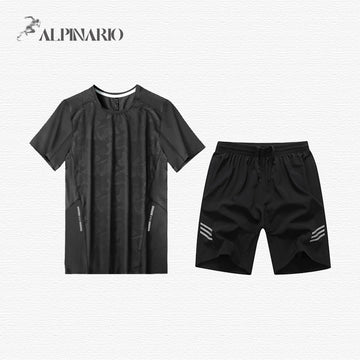
1. **Men’s 5-inch running shorts** – polyester knit around 140–180 GSM, elastic waistband with drawcord, one zip pocket, minimal trim.
2. **Men’s training/gym shorts** – 7–9-inch inseam, 220–260 GSM, 15–22% spandex for stretch and recovery.
3. **Women’s biker/yoga shorts** – 3–5-inch inseam, nylon or polyester with 18–25% spandex, a separate inner brief so the outer fabric stays non-see-through.
4. **Compression-style shorts** – 240–300 GSM in a poly/nylon blend with high spandex content, often sold with matching tops or through [our compression program](/pages/compression-shirts).
Demand timing matters too. In our order log, US brands start testing summer shorts between January and March, then reorder in April and May. If you wait until June to lock a factory slot, you are paying for air freight or waiting out a longer production queue. Right now, we also see more requests for shorts with a hidden side pocket for phones and reflective details at the hem. Those are not passing trends; they have become purchase criteria on Amazon listings and in specialty running retail.
We treat the [low-moq-sportswear](/low-moq-sportswear) part of the business as the demand-testing tool. If you have seen a gap in the market but cannot justify 1,000 units yet, order one sample, check your sales channel, then scale. This removes a lot of guesswork from shorts buying.
## Import duties & shipping
Import duty is the part where many buyers get caught. Two different shorts can land at two very different duty rates because the US tariff classification does not care about your brand story. It cares about the fiber, the construction, and the garment type.
Walk through this checklist before you commit to a production order:
1. **Knit or woven?** A knitted polyester short and a woven nylon short sit under different HTS chapters. That difference can move the duty rate more than the price of fabric.
2. **What is the dominant fiber?** If the short is 85% polyester and 15% spandex, the polyester content usually drives classification. Say so on your spec sheet.
3. **Is it lined or unlined?** Lined or unlined gym shorts can be classified differently because of how the garment is considered under apparel rules.
4. **Is there a US Section 301 angle?** Most China-origin apparel has been through several rounds of tariff changes over the past years. Your customs broker can calculate the current extra amount at the time of entry.
5. **Ask us to state the composition and country of origin on the commercial invoice.** We do this on every shorts order. But Alpinario is a factory, not a licensed customs broker. Have a broker review the HTS code before you quote a landed cost to your retail customer.
Shipping timelines are easier to estimate. From our floor near Ningbo, a typical ocean LCL shipment to the US West Coast runs about 17–25 days at sea; East Coast destinations take roughly 30–40 days. Add customs clearance and trucking after arrival. If you are in the middle of a launch and need shorts in hand sooner, air freight can cut the total window to days instead of weeks.
Amazon sellers should ask about FBA prep early. We can apply FBA labels, poly-bag each short, and ship directly to an Amazon warehouse. But we need your shipment plan and barcode file at the labeling stage, not after the cartons are sealed. This is a step we handle with the [sportswear-manufacturer](/sportswear-manufacturer) workflow we use across all our apparel lines.
## Price tiers
Short pricing is never a single number. The price moves with GSM, spandex percentage, trim, logo method, and order size. Below is a typical pricing guide for US-oriented shorts made in our region. These are reference ranges based on our factory’s usual polyester and nylon programs, not a fixed quote.
| Tier | Fabric & Weight | FOB Range per Unit | Typical Order Shape |
|---|---|---|---|
| Entry 5" running short | 100% polyester knit, 120–160 GSM | $3.80 – $5.50 | 300–1,500 pcs, 2–4 colors |
| Core training short | 82% polyester / 18% spandex, 200–240 GSM | $5.50 – $7.80 | 500–3,000 pcs, multi-size |
| Private label nylon short | 85% nylon / 15% spandex, 230–280 GSM, inner brief, reflective details | $7.80 – $11.00 | Sample-first program, then repeat orders |
We do not force a 300-piece minimum on anyone. Our MOQ is 1 piece, so a startup can order a single sample short with a custom logo to validate fit before committing. A mid-size order of about 300 pieces usually ships 4–6 weeks after sample approval. Larger orders follow the same production floor; we just schedule more cutting tables and sewing lines.
What pushes a short from the first tier to the third tier?
- **Fabric weight** – A 260 GSM fabric costs more per meter than a 120 GSM fabric.
- **Spandex content** – Higher stretch costs more and changes the sewing speed because the material shifts under the needle.
- **Logo method** – Heat transfer printing adds a small per-unit cost; embroidery adds more. A woven logo label falls in between.
- **Labeling** – Custom neck labels, wash labels, hang tags, and poly bags all factor into the final number.
- **Fit complexity** – A lined short with an inner brief and a zip pocket requires more operations than a basic elastic-waist short.
If you need full customization of fit, fabric, label, and packaging, our [custom-sportswear](/custom-sportswear) process is the one to read. Send us your artwork and sample photos, and we will build to your file.
## Sizing preferences
US sizing is where a good factory earns its margin. Cut the waist too small and you get returns. Cut the inseam wrong and you get negative reviews. Our pattern room works from US fit specs, not Asian standard sizes.
Before production, ask for these measurements in your tech pack:
1. Waistband width and stretched waist circumference
2. Hip circumference at 2 inches below the waistband
3. Inseam length – note whether you want 5-inch, 7-inch, or 9-inch
4. Leg opening width
5. Front rise length
When we produce shorts for a US buyer, we usually start from a fit sample in a middle size such as men’s size M or women’s size S. After the buyer approves the fit, we grade to XS–3XL. We keep measurement tolerance tight: around ±0.5 cm on side seams and ±1 cm on the waistband. That level of control only works because we are the factory doing the sewing, not a middleman placing orders with three different workshops.
We also recommend reviewing the size chart on your product page before finalizing production. If your running short is a 5-inch inseam in the product photo, the actual garment must match that number after washing. Our QC team measures first articles and pulls random pieces from the production line. The fit standard in your contract is the same one we use on the floor.
For more sizing and style guidance, our [running wear wholesale guide](/pages/running-wear-wholesale-guide) covers inseam, fit, and fabric decisions specific to that category.
## FAQ
**What is your MOQ?**
We accept 1 piece as an MOQ. You can order one sample short, one custom logo short, or one unit for a personal test. There is no factory minimum at Alpinario. This works well for startups, small gyms, and Amazon sellers validating a new style before placing a larger production order.
**What is the lead time to the US?**
Sample lead time is 3–7 days to ship. A mid-size order of about 300 pieces typically ships 4–6 weeks after sample confirmation. Then add shipping time: roughly 17–25 days by sea to the US West Coast, or 30–40 days to the East Coast. Air freight can be used when you need to restock quickly.
Still weighing whether a Chinese factory fits your supplier strategy? We cannot tell you that your margin will work — but we can give you a concrete quote with fabric, GSM, sizing, and labeling details, and answer your questions within 24 hours. If you are looking for a shorts wholesale supplier in the US market with a low MOQ and direct factory control, send us your shorts spec.
[Request a Quote](mailto:support@alpinario.com)