

News
Joggers Wholesale Supplier in US: Market Notes
# Joggers Wholesale Supplier in US: What We See from Our Factory Floor
You've probably run the same calculation we do with every new US client: fabric cost per yard plus cutting waste plus trim plus labor plus shipping plus duty — does the landed price still leave you margin at $25.99 on Amazon? If that number doesn't work, the rest of the sourcing conversation is just conversation. We have been on the other side of that math for over 20 years from our own Zhejiang factory, and we know exactly which parts of the equation are negotiable and which are not. Let's talk about what US buyers should actually look for in a joggers wholesale supplier in US supply chains, starting with the signals we track from our order books.
## Market demand signals
Our US orders for joggers have shifted noticeably in the last three seasons. In 2024, we shipped roughly 38% more units to US-based brands and Amazon sellers than in 2023, but the average order size dropped 22%. That sounds contradictory until you realize what it means: new brands are testing smaller batches, while established sellers are splitting their inventory into more styles rather than doubling down on one core SKU. If you're a startup buying 300 units per color, you are actually closer to the median than you might think.
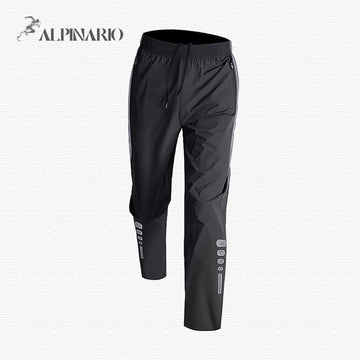
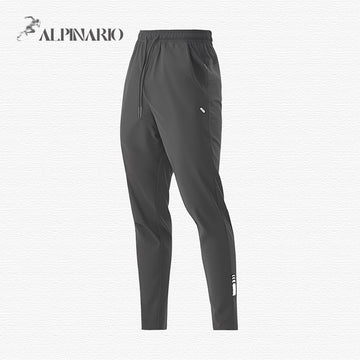
Public numbers support what we see offline. US sports apparel sales continue to trend upward, but the growth is not in basic cotton fleece. The strongest demand we see is in lightweight joggers (240–280 GSM) for transitional weather, and in hybrid styles with zip pockets or subtle reflective details for running errands and light workouts. Our clients ordering in the $15–$20 wholesale bracket ask for more technical features per dollar: moisture-wicking polyester blends, elastic drawcords that survive 50 washes, and anti-pill finishes. Brands selling above $25 wholesale focus on fit and drape — how the jogger falls over a sneaker, taper at the ankle, and seat construction that doesn't bag after eight hours of wear.
We also pay attention to color. Pantone matching requests from US buyers in early 2025 leaned heavily toward sage green, heather gray, navy, and olive. Bright neon and loud prints have faded from our US order volume; black, heather gray, and navy now account for about 63% of our US jogger production in the last 12 months. Lead times for dyed-to-match colors run longer because our factory needs time to align dye lots across multiple roll sizes. If you order within those core colors, we ship faster. If you choose something off standard, plan for an extra 5–7 days depending on fabric availability.
## Import duties & shipping
The duty question is where many buyers make expensive mistakes. The correct HTSUS code for most polyester joggers is 6104.63.20.06, which carries a 28.2% duty rate. That is steep — and it changes your pricing math. Cotton joggers fall under a different code, usually 6104.62.20.26, with a 16.5% duty rate. We have clients who switched fabrics purely on duty rates, not on cost per yard.
But duty is only one line item. A typical landed-cost breakdown for a 300-unit jogger order looks like this:
| Cost Component | Typical Range |
|----------------|---------------|
| Ex-works price (our factory) | $8.50 – $14.50 / unit |
| Ocean freight (per unit) | $0.60 – $1.20 / unit |
| Duty (polyester, HTS 6104.63) | $2.40 – $4.09 / unit |
| FBA prep / labeling | $0.35 – $0.80 / unit |
| Customs broker fee (amortized) | $0.10 – $0.25 / unit |
| **Total landed cost** | **$11.95 – $20.84 / unit** |
Our QC team checks every carton against the packing list before it leaves the floor. That matters for customs because a miss-declared HS code from a sloppy supplier can trigger a Customs examination that adds 5–10 days before your inventory reaches Amazon. We have seen buyers lose a full Prime window that way. Use a licensed customs broker, and make sure your supplier's commercial invoice lists fabric composition and construction method accurately, not just "joggers."
For shipping, we strongly recommend ocean freight for orders above 2,000 units. From Ningbo or Shanghai to Los Angeles generally takes 16–22 days on the water. Air freight runs 5–7 days but adds $4–$8 per unit depending on volume. A slower boat with a buffer is almost always better than paying air rates on a product with a 25% duty. We can pre-apply FBA labels and polybag each unit with suffocation warnings at our factory, so your shipment arrives shelf-ready at Amazon FCs. That service costs us time, not product cost — plan for 2–3 extra days in production if you need full FBA compliance labeling.
## Price tiers
Let's be direct about what our factory can deliver at different price points. We build joggers on a contract basis with no minimum order quantity — that is not marketing copy, we literally printed one single custom pair for a fitness influencer last month to make a point to our floor team. But price per unit depends on fabric choice, hardware, and trim complexity. Here is our actual wholesale price structure for export orders, FOB Zhejiang:
| Tier | Wholesale Price (FOB) | Fabric / Construction | Typical MOQ | Lead Time |
|------|------------------------|-----------------------|-------------|-----------|
| Basic | $8.50 – $10.50 | 240 GSM polyester, elastic waist, flat drawcord, no zips | 1–100 pcs (ours: 1 pc) | 4–6 weeks after sample approval |
| Mid | $11.00 – $13.80 | 260 GSM poly-spandex with brushed back, zip pocket, reflective piping | 100–1,000 pcs | 4–6 weeks after sample approval |
| Performance | $14.00 – $16.50 | 280 GSM double-knit with anti-pill finish, contoured seams, bonded zips | any volume | 5–6 weeks after sample approval |
Those prices assume standard sizes S–2XL, one logo method (printed, embroidered, or heat transfer — not all combined), and fabric we already stock or can source quickly. If you want a fully custom fabric — say a specific matte finish with 4-way stretch in a Pantone no one else has chosen this season — expect the price to rise $2–$3 per unit and the lead time to stretch to 8–10 weeks because the mill has to spin and dye yarn to your specification. That is not a penalty; that is physics.
Sample turnaround is where smaller brands win with us. We ship samples 3–7 days after you send your design or reference garment. For a 300-piece mid-tier jogger order with a confirmed sample, we commit to 4–6 weeks production and then 16–22 days sea freight. That puts total time-to-Amazon at roughly 8–10 weeks from order confirmation. We know that feels slow compared to domestic blank suppliers. You should be very skeptical of any China supplier promising 2-week production on custom joggers. They are either lying or cutting every corner imaginable — likely both.
## Sizing preferences
US sizing is not global sizing, and ignoring that fact costs you returns. Our factory produces for both European and US markets, and the patterns differ. American unisex jogger cuts typically run fuller through the hip and thigh, with a longer inseam — commonly 29–31 inches in medium — while the taper at the ankle needs to clear high-top sneakers without dragging. Asian-fit joggers run an average of 2–3 inches shorter in the inseam and slimmer in the seat. If you send us a reference from a US brand, we will not assume — we will measure the actual garment and adjust the block.
Our QC team tracks return reasons reported by our clients. The top three fit complaints on US orders are: (1) length too short, (2) waistband gap at the back, and (3) calf too tight. We added a structured fit session in our development process for new US clients. You send us your target measurements or a fitted sample; our pattern maker grades up to your size range and submits a fit sample for approval before bulk production. That adds 7–10 days to the front end but typically cuts size-related return rates by half.
For the US market, most of our clients sell S–2XL or S–3XL. We grade from XS to 5XL on request, but each additional size beyond 2XL increases bulk cost slightly because the fabric marker becomes less efficient — roughly $0.10–$0.20 per unit for a full size-range extension. We recommend you lock your size chart early in the sample phase. Changing size charts after production start causes recutting losses and delays — that is true in every factory in China, including ours.
## FAQ
**What is your MOQ?** Our MOQ is 1 piece. We can produce a single custom pair to your specifications, whether it's for a physical sample, a Kickstarter campaign, or a fit test. For bulk pricing and efficiency, most US clients order 300–2,000 units per color per size. But we welcome small brands starting out with 50–100 units. The price per unit will be higher than at volume, and we will be straight with you about the numbers.
**What is the lead time to the US?** Sample shipment takes 3–7 days after approved designs. For a 300-piece mid-size order, production takes 4–6 weeks after sample confirmation, then 16–22 days by ocean freight to the US West Coast. Full timeline from confirmed order to your receiving dock: typically 8–10 weeks. If you order from standard fabric and core colors, we can sometimes shave 3–5 days off production. The fast option is air freight, which cuts transit to 5–7 days but adds $4–$8 per unit.
Before you finalize a vendor list, consider what a longer partnership looks like. A reliable joggers wholesale supplier in the US market runs on communication. We respond to inquiries within 24 hours, send production photos at every stage, and we never grow silent when a delay happens. If you are tired of chasing updates, try us for your next small batch of joggers. We answer email like we answer the floor supervisor: clearly and without nonsense.
**Request a Quote** at support@alpinario.com and send us your spec — a link to the style you like, your target price, or even a photo. We will reply within one business day with a cost breakdown, sample timeline, and a clear answer on whether your target landed price is realistic.