

News
Wholesale Gym Clothing for Startups: Volume & Sizing Guide
# Wholesale Gym Clothing for Startups: Volume Tiers, Size Curves, and Reorder Planning
The last factory audit you did took six weeks to schedule, and when you finally got there, the "MOQ 500 per color" hit you like a dumbbell to the chest. You need 300 units for your launch, not 3,000. And the landed cost per unit? The factory quoted you FOB, but you forgot to calculate the sampling fee, the pre-production samples, the sea freight, and the fact that your size curve guess might be completely wrong for your customers.
I run the production floor at Alpinario, a 20+ year factory in Zhejiang that has always worked directly with brands rather than through trading companies. We do OEM, ODM, and private label. We also work with a zero-MOQ model—you can order 1 piece for a sample or test a style with 50 units. But zero-MOQ does not mean zero-planning. Here is the operational how-to for ordering wholesale gym clothing for startups without choking on inventory costs.
## Volume tiers & price breaks
Most buyers assume that a factory with no MOQ charges a flat price for everything. We don't. We price by a tiered matrix based on total unit volume per style, per size run. The tiers also affect how much manual handling we do on the line.
When you request a quote, we ask for your estimated annual volume and your first order volume. This determines which of our three pricing tiers you fall into.
| Order Volume (per style, per size run) | Price per Unit (2-Color Print, Polyester) | Sample Lead Time | Production Lead Time |
|---|---|---|---|
| 1–99 pieces (Samples & Test) | $18.50–$24.00 | 3–7 days | N/A (small batch, 3–5 days) |
| 100–500 pieces (Startup Launch) | $11.80–$15.20 | 3–7 days | 5–14 days after sample approval |
| 501–2,000 pieces (Growth Reorder) | $9.60–$12.40 | 3–7 days | 4–6 weeks after sample confirmation |
| 2,001+ pieces (Scale) | $8.40–$11.00 | 3–7 days | 4–6 weeks after sample confirmation |
The price spread between Tier 1 and Tier 4 is not about material—the fabric cost is identical. It's about setup time. Every time we switch a heat press plate or embroidery hoop, the machine operator spends 15 minutes adjusting tension and alignment. On a 50-piece order, that setup is 30% of the labor cost. On a 2,000-piece order, it's 2%. That's why our price per unit drops by about 50% as you scale.
If you are a startup founder, do not order your entire first year's inventory at Tier 1 pricing. Order 100–200 pieces at Tier 2, test the market, and then reorder at Tier 3 once you know which colors sell. The difference between $15.20 and $11.80 per unit on a 200-piece order is only $680. On a 1,500-piece reorder, it is $5,100 of pure margin back into your pocket.
## Size curves that fit startups
The single biggest inventory mistake we see from startup brands is an incorrect size curve. You find a generic chart online says "S 20%, M 40%, L 30%, XL 10%" and apply it to your compression shirts. Then your XL sits in your warehouse for nine months because your gym audience skews younger and leaner than the general activewear population.
Here is what our 20 years of production data tells us. For basic wholesale gym clothing for startups (t-shirts, tanks, shorts) selling direct-to-consumer:
- **S:** 10–15%
- **M:** 35–40%
- **L:** 30–35%
- **XL:** 10–15%
- **XXL:** 5%
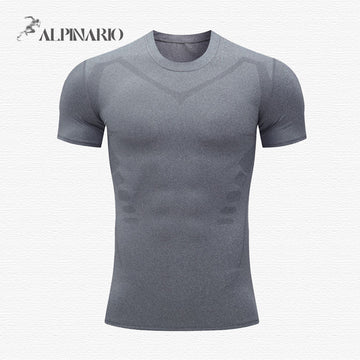
But those numbers shift dramatically by style. Our /pages/compression-shirts data shows that compression tops sell 15% more S and M sizes than regular t-shirts. People size down for compression to get the muscle-hugging fit, so you should shift your curve down. A good compression shirt size curve we use for startup brands is S 20%, M 45%, L 25%, XL 7%, XXL 3%.
For our /pages/yoga-wear-wholesale-guide styles, the curve skews the opposite way for bottoms. Yoga pants and leggings sell more M and L sizes because customers size up for coverage and comfort. If you order 100 units of a legging style, use M 40%, L 35%, S 15%, XL 10% as your starting point, then adjust after the first 30 days of sales.
The practical step list we give to every startup that orders with us:
1. Order 100–150 units as your first production run.
2. Build your size curve 10% heavier in M and L than your "intuition" tells you. Our data shows first-time buyers from gyms and fitness studios consistently under-order L and XXL.
3. Keep 20% of your run as "safety stock" of blank, unprinted garments. We can heat press a design on them within 3–5 days, so you react to sell-through rates.
4. Analyze sell-through at day 30. If L sells faster than M, shift your next reorder curve by 5–10%.
Never, ever order a 50/50 split of S and M. You will be stuck with S.
## Reorder rhythm
Reorder planning for wholesale gym clothing for startups is about matching your cash flow to our production calendar. We do not operate like a fast-fashion warehouse that holds stock. We cut and sew to order.
The rhythm we recommend for a brand doing $10,000–$30,000 in monthly revenue:
- **Day 1–7:** You generate a purchase order based on last 30 days of sales, projected growth, and upcoming promotions. You send us your target quantity and size curve.
- **Day 3–7:** We send you a digital pre-production sample if the design changed, or we get approval to proceed on the existing spec sheet.
- **Day 7–35:** Production runs for 4–6 weeks for 300+ piece orders. During this window, we send you a mid-production photo check so you can verify the label placement and logo alignment.
- **Day 35–42:** Goods ship out. We can pre-apply FBA labels and ship directly to Amazon warehouses. Many of our customers are /private-label-activewear brands that want zero touch on the logistics chain.
The key to the reorder cadence is your sales velocity. Here's the hard rule we reinforce with clients: when you have 45 days of inventory left, send the reorder. Not 30 days, not 90 days. 45 days. This covers the 4-week production window plus 1 week of shipping buffers.
For our /sportswear-manufacturer partners who run Amazon PPC, this 45-day rule is non-negotiable. A Best Seller Ranking dip due to stockout costs more than the inventory holding cost ever will.
Small orders under 100 pieces? We turn those around in 5–14 days. That allows you to do a "micro test" of a new colorway or a new style without committing to 200 units. We have clients that order 50 pieces of a new design each month just as a market probe. When one of those probes hits a 30-day sell-through of 80%, they convert that style to a 500-piece order at the Tier 3 price break.
## Branding options at wholesale tier
At Tier 2 pricing ($11.80–$15.20), you have more branding options than you might think. The price we quote typically includes a partial or full set of branding, depending on the complexity.
Your options on our production floor:
- **Screen print logo:** 1-color or 2-color flat screen print. Included in the base price for most synthetic fabrics. Good for chest logos and shoulder prints.
- **Embroidery:** For heavier polos and hoodies, we use a Tajima multi-head machine. We charge a per-piece embroidery rate of $0.50–$1.50 depending on the stitch count. A simple 8,000-stitch logo hits about the midpoint.
- **Heat transfer (vinyl or silicone):** Silicone heat transfer for gym leggings and sports bras costs $0.80–$1.20 each. This pattern is very popular on our women's line because it's more flexible than screen print.
- **Neck labels:** We can do a woven neck label, a printed heat transfer label, or a tear-away label. Tear-away is the cheapest, but for gym clothes the buyer prefers a soft heat-transfer label for zero itch.
- **Hang tags & poly bags:** We supply custom-printed hang tags. Cost runs $0.05–$0.15 per unit depending on card weight and lamination.
Ordering 500 units with a woven neck label, silicone heat transfer logo, and custom polybag usually lands you at exactly the base price—no additional branding fee beyond the unit price. Above 1,000 units, we often drop the embroidery setup fee entirely.
## FAQ
**What is the minimum order?**
Our MOQ is 1 piece. You can order a single unit for a product sample, a size-up sample, or a test print. We do not charge a separate "sample fee" beyond the cost of the garment and any branding you request. For production runs, there is no minimum quantity for standard styles from our existing patterns. For fully custom patterns (new cuts and grading), the minimum is 100 units per color to justify the pattern-making and grading work. This is rare—most startups work from our existing /custom-sportswear templates and apply their own colors and logos.
**Can we mix styles in one order?**
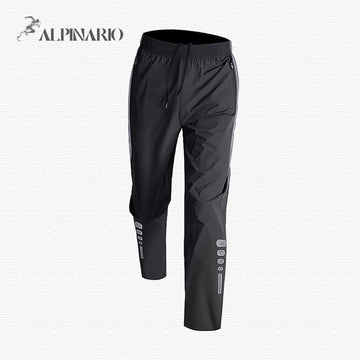
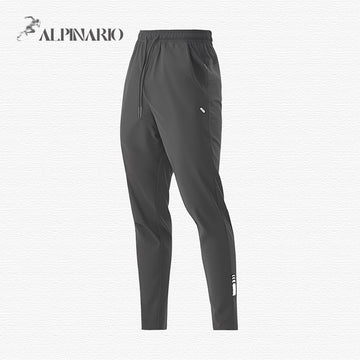
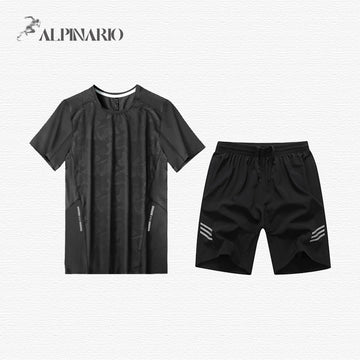
Yes, absolutely. Mixing styles is a core part of our low-MOQ model. For a startup launch, an order can contain 20 units of compression shirts, 30 units of tank tops, 25 units of shorts, and 20 units of leggings. As long as the total order quantity lands in a single volume tier, you get the tier pricing for the whole batch. The only real restriction is that each style and color is cut from the same fabric type. We cannot mix a polyester/lycra blend with 100% cotton in one production run without resetting the cutting tables, which introduces a small downtime cost. If you do want to mix fabric types, we simply quote them as two line items.
---
If you want a landed-cost breakdown for your first 150-piece run, send me your basic specs and target price per unit. We'll tell you if it's realistic for the fabric and what tier your volume lands in.
[Request a Quote](mailto:support@alpinario.com) — we respond within 24 hours.