

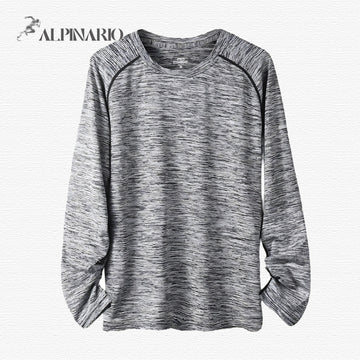
Polyester vs Nylon for Compression Wear: The Practical Choice
Choosing between polyester and nylon isn't just a line in a tech pack—it directly affects how your compression wear performs and how customers perceive your brand. I'm from the production line at Alpinario, a Zhejiang activewear factory with 20 years under our belt. Every day, we help brands make this decision based on what they're making, who it's for, and how it needs to perform. Here’s our hands-on breakdown to guide you.
The Core Comparison: What the Fabrics Actually Do
Let's get into the material science, but from a practical, factory-floor perspective.
Our Factory's Take: The question isn't "which is better," but "which is better *for this specific garment*?" For example, for a running tight where muscle vibration reduction is key, we’d typically recommend a polyester-spandex blend (often 85/15). For yoga pants where comfort and a "barely there" feel matter, a nylon-spandex blend (often 78/22) often wins. We test stretch and recovery for every batch to ensure the compression ratio holds up.
How We Apply This Knowledge at Alpinario
We don't just sell fabric; we engineer solutions. Here’s a real-world snippet: last month, a brand from Brazil started with a 20-piece test order of polyester running tanks. They were testing the market. The feedback on the moisture management was so positive that their reorder came in for 500 pieces within three weeks. They specified the exact polyester blend we had sampled.
This is what working with us—a factory, not a trading company—looks like:
Ready to test a material? Start with a sample request.
Category-Specific Production Details
Beyond fabric choice, compression wear lives and dies by construction. Here’s what we obsess over:
* **For Compression (Polyester & Nylon):** **Tension Mapping.** We plot stretch percentages across sizes (S to 5XL) to ensure the compression gradient is consistent. A medium must feel as supportive as a small, proportionally. * **For Yoga/Studio Wear:** **Opacity & Squat-Proofing.** Every light-colored production batch goes through a standardized third-party squat test. No "see-through" surprises for your customers. * **For Running & Outdoor:** **Reflective Safety.** We integrate reflective yarns or heat-transfer elements into seams or logos. It's a feature that becomes a selling point.
Evidence in Action: A European athleisure brand came to us with a high return rate on their initial nylon leggings due to sheerness. We switched to a higher-denier nylon from our OEKO-TEX certified supplier, adjusted the knit density, and implemented our squat-test protocol. Their next production run saw customer-reported return rates for sheerness drop by 12%.
Have a specific performance challenge? Let's problem-solve it.
Your Ordering Pathway
1. **Discuss Specs & Fabric:** You email us your tech pack, or we consult on material based on your use case (polyester vs. nylon). 2. **Approve Development Sample:** We ship a sample in **7 days**. Sample cost is credited to your first order. 3. **Confirm Bulk Production:** Upon approval, we move to bulk. Typical timeline: **4-6 weeks**. 4. **Final QC & Shipment:** We conduct AQL 2.5 inspection, send you photos, and ship directly **DDP** to your door or your FBA warehouse with pre-applied labels.
Frequently Asked Questions
What is the actual MOQ for a custom compression wear order?
Our **custom/OEM MOQ is 20 pieces** per style per color. This allows you to run a real market test without a huge capital outlay. For our in-stock styles, you can order just **1 piece** to evaluate quality firsthand.Can you combine polyester and nylon in one garment?
Absolutely. This is a common technical approach. For example, using nylon for the panels where comfort and stretch are paramount (inner thighs, side panels) and polyester for the main compression zones and waistband for better sweat management and structure. We'd develop this blend based on your performance goals.How do you ensure the color won't bleed or fade?
We use fiber-reactive dyes for nylon and disperse dyes for polyester, both chosen for your target market's compliance standards (like REACH). Every batch undergoes colorfastness testing to washing, light, and rubbing. We provide the test data with your QC report.What is your lead time for a restock?
If the style, fabric, and trims are already in our system from your previous order, we can often deliver a restock within **7 days**, versus the 4-6 weeks for a new production run.Need pricing or a sample? * **Email for a detailed quote:** support@alpinario.com * **Fill out our inquiry form:** Get a Custom Quote * **Chat on WhatsApp:** +86 138 XXXX XXXX *(Typical response within 2 hours during business days)*