

News
Compression Shirts Wholesale Supplier in Singapore | Alpinario
# Compression Shirts Wholesale Supplier in Singapore: A Zhejiang Factory’s Notes for Your First MOQ
When a Singaporean brand founder emails us for the first time, the conversation usually starts in the same place: not with fabric blends, but with a landed-cost calculation. They want to know if a 50-piece test order makes sense against their freight, or they are trying to compare our FOB price against a supplier who claims a cheaper rate but can’t show a factory floor. In the last six months, our sales team has answered three variations of the same question: **"What is the actual cost per unit, on the water, before GST?"**
We won’t give you a lazy quote on the first message. But we will give you the operational breakdown we use with our existing clients from Singapore—the demand signals to trust, the shipping steps we cannot do for you, and the price tiers based on what we actually run on our floor in Zhejiang.
---
## Market demand signals
Singapore is not a high-volume market in the way Australia or the US is, but the buying behavior is sharper. Our clients in Singapore fall into three buckets: gyms buying for retail, personal trainers buying for their own classes, and Amazon sellers who use Singapore as a regional hub. The common signal across all three is the demand for **sweat-wicking fabric with a tight, but not restrictive, fit**. It sounds obvious, but we see the nuance in the reorder data: Singaporean buyers reject compression shirts that are too thick. They don’t wear a 240 GSM as a base layer in a 31°C climate.
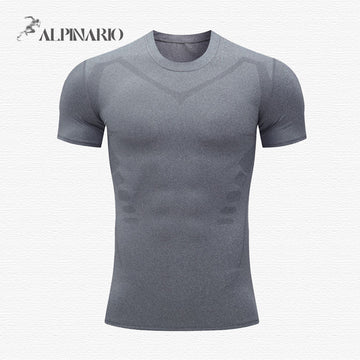
What works in the Singapore market is a 180–200 GSM polyester-spandex blend (about 80/20). That weight gives you the compression hold without turning the shirt into a wetsuit. We also see a strong preference for **round-neck over mock-neck**, and for shorter sleeves—a 17 cm sleeve length that sits higher on the bicep. This is a climate-driven fit, and if you are an Amazon seller, it is a ranking factor in the SG marketplace that most overseas suppliers miss.
The second demand signal is the *hydration pack* demographic—runners who buy a 3-inch inseam short with a compression shirt for marathon training. Singapore has a year-round running calendar, and our Singapore-based clients order more in February and July. They are planning the first batch for the **Singapore Marathon season (November)**, not for January. If you are a brand founder, you need to reverse-engineer your supply chain: production plus sea freight (say, 5 weeks total) means you should place your order in early September, not October.
Finally, there is the *gym retail* signal. Independent gyms in Singapore selling apparel under their own label are growing, but they are cautious. They start with 30–50 pieces per design because storage space in Landed properties is expensive. That is a signal for our low-MOQ factory model—we can support that, and we’ll get to the minimums in the FAQ below.
| Buyer Type | Typical Order Size | Priority | Fabric Weight Preference | Lead Time Expectation |
|------------|-------------------|----------|---------------------------|-----------------------|
| Amazon SG seller | 300–600 pieces | FBA-ready packaging, speed | 180–190 GSM | 4–6 weeks |
| Independent gym | 30–100 pieces | Low MOQ, logo placement | 190–200 GSM | 4–6 weeks |
| Personal trainer | 1–20 pieces | Quick sampling, no minimum | 180 GSM | 3–7 days for sample |
| Brand startup | 100–300 pieces | Pantone matching, private label | 180–200 GSM | 4–6 weeks |
**The operational takeaway**: design for the humidity. If you plan to sell only in the SG market, do not use a 240 GSM fabric. Our factory’s standard compression fabric is 190 GSM, and it is the most reordered.
---
## Import duties & shipping
Here is the part we can only advise on, not control. As a Chinese factory, we do not handle local Singapore clearance or pay your local import duties. But you need the basics to avoid a 25% surprise on your P&L.
Singapore charges **7% GST** on all imported goods. That is the only tax you will pay—Singapore is a free port, so there is no additional customs tariff on textiles, **provided the HS code is accurate**. The HS code for compression shirts made of knit synthetic fabric is usually **6110.30** (men’s or women’s pullovers, of man-made fibers). Under the ASEAN-China Free Trade Area (ACFTA), some textile goods may qualify for preferential tariff treatment, but the rules of origin are strict. We can issue a **Form E** certificate for you if requested, which may help you claim a 0% tariff instead of the base rate. However, you must tell us this before production starts. We cannot retroactively provide it if the goods have already shipped—our shipping documents need to match the certificate.
Shipping times from Ningbo or Shanghai to Singapore run **6 to 9 days** for a direct sea freight service. Port-to-port is fast, but the real variable is the rubber band: customs clearance in Singapore usually takes 1 working day if your documentation is clean. If you are shipping via air freight, transit time is 2 to 3 days, but the cost per kg can be prohibitive for a 100-piece order. For a standard 200-piece batch (each shirt roughly 180 grams), air freight will cost about **$2.00–$3.00 SGD per kg** from our agent, versus sea freight at roughly **$600–$800 SGD for a 1.2 CBM crate**.
We have a rule about shipping: **we always quote FOB (Free On Board) or EXW (Ex Works) from our factory**. We are not a freight forwarder. Our logistics partner can book a consolidated shipment for you if you want, but the Singaporean buyer usually saves 15–20% handling their own forwarder—a local SG broker knows the clearance process better than a Chinese factory export manager. What we can guarantee is a **paper trail**: packing list, commercial invoice, and the Bill of Lading are issued within 2 days of the vessel departing.
For Amazon sellers, the option to use **FBA pre-labeling** simplifies the process. We can print your FBA barcodes and apply them at our factory before shrink-wrapping. You skip the unboxing, re-labeling, and inspection step in Singapore. You send us the FBA shipment ID and the barcode sheets; our packing department does it on the line. No extra charge beyond the label printing material cost.
---
## Price tiers
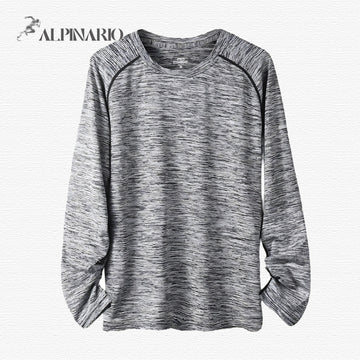
Your margin depends entirely on the compromises you are willing to make. We price our compression shirts based on the standard Chinese factory cost logic: fabric weight, seam complexity, and decoration type. The figures below are **FOB USD per piece, from our Zhejiang factory**, for a plain round-neck compression shirt in 190 GSM polyester-spandex with flatlock stitching.
- **Entry tier (no logo, bulk blank)**: $5.20–$6.80 USD per piece. This is for a blank shirt, no logo, no hang tag. MOQ is 100 pieces because that is the quantity we run on our cutting table without a changeover. We are still below the market standard because our factory owns the knitting machines.
- **Mid tier (logo, private label, 150–300 pieces)**: $6.80–$8.50 USD per piece. This includes one embroidered logo on the left chest (up to 10,000 stitches) and a custom woven neck label. This is the bracket for 90% of our Singaporean gym clients.
- **Full custom tier (ODM, low MOQ 1–99 pieces)**: $9.50–$12.00 USD per piece. This covers 1-piece customized compression shirts, including a new pattern cut, custom color, sample approval, and your own hang tag, wash care label, and polybag. The range depends heavily on whether you are changing the size grading or just the color.
**Important cost caveats**:
- **Pantone color matching**: included for free in the sample phase, but if you ask for a special fluorescent or color-matching that requires a new dyelot of fabric, it will add $0.30–$0.50 per piece.
- **Sublimation printing** on compression shirts costs an additional $1.20–$2.50 per piece depending on coverage. This is only available on polyester-based fabric.
- **Pattern digitizing** for a custom fit is a one-time fee of $50–$80 USD.
Our pricing is not a negotiation game. We will tell you on the first reply whether your target price is achievable at your volume. If you want $5.00 FOB for a 50-piece custom order, the answer is no—but we will tell you what fabric to drop to (a 150 GSM knit) or what logo method to use (a single heat press instead of embroidery) to get closer to your number.
---
## Sizing preferences
Singaporean end-consumers are generally one size smaller than North American buyers. A typical US L compression shirt fits a Singaporean M+. We see this clearly in our returns data for clients who sell through Shopee and Lazada.
We grade our compression shirts in chest widths based on the finished garment half‑chest measurement:
- **XS**: 40 cm half-chest
- **S**: 42 cm
- **M**: 44 cm
- **L**: 47 cm
- **XL**: 50 cm
For a Singaporean market, our recommendation is to adjust to **XS–XL but add a size at the top end**. You should run your size range as XS, S, M, L, XL, and then one **XXL**. The compression fit means a buyer who wears an XL in a normal t-shirt will often need an XXL in a compression shirt because the fabric stretches and they want less skin-hugging pressure. Our pattern makers can grade an extra 5 cm difference for the XXL without a material cost change—it is just a size step in the pattern.
If you are a brand startup building your first spec sheet, do not use the European Stoll sizing chart. It will not match the body proportions of the average Singaporean male. We offer a **fit adjustment service** on any sample: you order a sample, send us the fit feedback, and we adjust the patterns. The first adjustment is free. Any further adjustments are $20 per size grade for the pattern work.
---
## FAQ
**What is your MOQ?**
Our official MOQ is **1 piece**. You can order a single custom compression shirt as a sample. There are no extra setup fees for small quantities. For bulk production ready to ship, we suggest a minimum of 50 pieces per design to make the per-unit processing cost worthwhile, but this is not a hard rule—if you want 10 pieces with your logo, we will produce it at a slightly higher unit price. The MOQ is flexible because we own the factory and we are not a trading company pushing inventory.
**What is the lead time to a Singaporean buyer?**
For a sample order (custom cut or stock fabric), we dispatch within **3–7 days**. For a medium-sized production order (300 pieces), the timeline is **4–6 weeks after sample confirmation**. Shipping to Singapore via sea freight takes 6–9 days; air freight takes 2–3 days. The bottleneck is never the shipping—it is the sample confirmation cycle. We count our 4-6 week lead time from the moment you confirm the pre-production sample, not from the day you place the order. If you change a color or a logo position after confirmation, that resets the clock.
**Do you handle FBA shipments?**
Yes. We pre-print and apply FBA barcodes and ship directly to Amazon warehouses in Singapore or any other region you need.
**Can you match a specific Pantone color?**
Yes, on polyester and polyester-blend fabrics we can match almost all Pantone colors. We ask for a physical swatch if possible, or the Pantone code. For a dark navy vs. a fluorescent orange, the accuracy is better if you send a physical sample via DHL.
**Can you produce a compression shirt with a reflective logo?**
Yes, but we only use heat-transfer reflective film. We do not do reflective printing via screen printing because it cracks after a few washes.
---
We are a 20+ year factory in Zhejiang, not a trading company. When you request a quote, you are going straight to the people who run the knitting machines and the QC line.
**Request a Quote** → [support@alpinario.com](mailto:support@alpinario.com)