

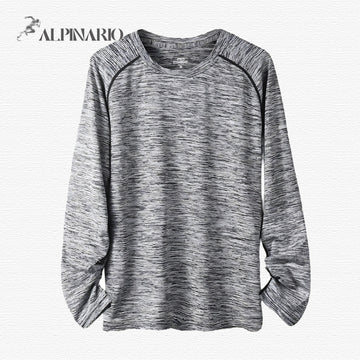
Wholesale Compression Shirts: Sizing, Tension & Fabric That Actually Sell
I've spent two decades on the cutting tables of our Zhejiang factory, and one question comes back more than any other: "Which compression shirt should I stock?" The honest answer isn't a model number — it's tension, mesh placement and sizing. A shirt that feels like a second skin at size S but sags at 5XL isn't a quality problem; it's a grading problem. Here's how we build shirts consistent across the size run, and what to ask any supplier before you commit a wholesale order.
Choosing the Right Silhouette for Your Range
Compression shirts come in four main silhouettes, and each earns its place differently:
A balanced opening range is usually 40% short sleeve, 30% long sleeve, and 30% tanks plus specialty cuts — we adjust the split to your market.
Fabric: Where Compression Actually Comes From
Compression isn't a marketing word — it's a physical property of the knit and elastane content. On our floor, shirts labeled "compression" run **15-20% spandex** blended with polyester. Drop below that and you get a snug fit that loses its grip; push far above it and the garment feels like a rubber sleeve and traps sweat.
The blend ratio changes with the job. For running shirts we typically use an **85/15 polyester-spandex** construction — polyester drives wicking while 15% spandex gives muscle support. For recovery wear we shift toward a richer stretch, and we offer nylon-spandex blends when buyers want a softer "second-skin" hand-feel. Every batch gets a stretch-and-recovery test, because a shirt reading 20% stretch on day one must still read 20% after 20 washes.
Mesh Placement: The Difference Between "Compression" and "Sweat Prison"
A great compression shirt manages heat, not just muscles. That's where mesh paneling comes in — strategically placed open-knit zones that dump heat while the main body keeps its compression:
When we place mesh, we cut the panel so its open structure doesn't interrupt the tension gradient — the compression should transition smoothly, not give way mid-lat. Ask your supplier whether their mesh zones are designed into the tension map or just sewn on for looks.
Tension Mapping Across S–5XL
This detail separates a real factory from a trader. We plot stretch percentages across every size from S to 5XL so the gradient is *proportional* — a size M must feel as supportive relative to body size as a size S. Tension mapping is standard: we measure stretch and recovery at chest, waist and bicep, grade the pattern so each size hits its target, test finished samples across the run (not just one size), and repeat on every production batch because yarn and dye lots shift stretch. That consistency is what keeps wholesale return rates low — customers who buy an M this season expect the same fit next season.
Color, Logo and Finish Options
Wholesale doesn't mean plain. Most compression shirt orders carry at least one brand touch: **color** matched to Pantone references (F004), **logo** via screen print, embroidery, or heat-transfer (F006), an optional **anti-odor finish** that stays fresher through repeated wears, and **reflective details** on running shirts at chest, back, or sleeves. We recommend a printed sample before the bulk run — a logo that looks sharp on cotton can crack on high-stretch compression fabric. That 7-day sample protects a whole production run.
Wholesale MOQ, Lead Time and Quality Checks
Our terms let you test before you commit:
New styles follow a **7-day sampling + 4-6 week bulk production** path from sample confirmation; restocks of styles we already run ship in 3-7 days.
Every shipment is inspected to **AQL 2.5 (ISO 2859-1, General Inspection Level II)**. For a 500-piece batch that means a 50-piece sample — we accept 2 defective units and reject on 3, and we photograph the sample for you before dispatch. We pre-apply FBA labels and ship DDP to the US, UK, and EU.
Why consistency matters: a Brazilian brand started with a 20-piece test order of running tops, then returned for 500 pieces within three weeks — the tension and color matched exactly between batches. That's what wholesale buyers need to build a brand on.
Styles We Manufacture for Compression Shirts
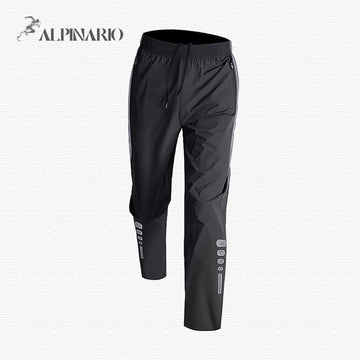
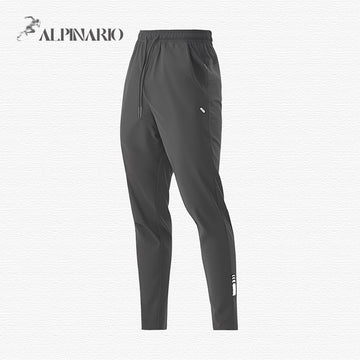
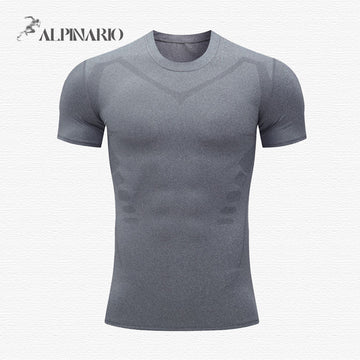
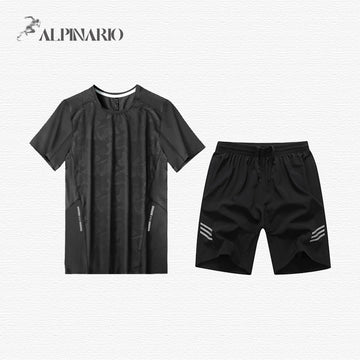
Live wholesale styles from our factory catalogue:
Frequently Asked Questions
What is the minimum order for wholesale compression shirts?
You can order **1 piece** of an in-stock style to test quality, **20 pieces** per style per color for custom compression shirts, and **100 pieces** per style for private label. No 500-piece wall.How do you keep compression consistent across S to 5XL?
We use tension mapping — plotting stretch and recovery at multiple body points and grading the pattern so each size hits the same proportional compression, retested on every batch.Can you match our brand color and add our logo?
Yes. We match any Pantone color (F004) and offer screen print, embroidery, or heat-transfer logos (F006), with a 7-day sample to confirm before bulk.What is your lead time for a wholesale compression shirt order?
In-stock styles ship in 3-7 days; custom runs ship 4-6 weeks after 7-day sample approval. Restocks of an existing style ship fast.Do you inspect bulk shipments?
Yes. Every shipment passes **AQL 2.5 (ISO 2859-1)** inspection with the Ac/Re sampling table applied, and we send inspection photos before dispatch.Get a Quote
*For the full picture of how to verify our factory, read our guide to choosing a sportswear manufacturer, and for wholesale terms across categories visit wholesale sportswear. If you're building a full compression line, start with our wholesale compression wear overview.*